
are mini goldendoodles good for first time owners
If you are asking, “are mini goldendoodles good for first time owners,” the honest answer is yes for some households, if you can make time for training, grooming, and daily companionship. Their friendly, people-focused tendencies can appeal, but no breed makes puppy care effortless.
Key Takeaways
- Mini Goldendoodles can suit first-time owners who have the time and patience to invest in early training and consistent routines.
- Their people-focused nature means they thrive on daily companionship, so long hours alone can lead to stress or unwanted behavior.
- Regular grooming is part of the commitment, since their coats need brushing and professional care to stay healthy and comfortable.
- No puppy is low effort, and individual temperament varies, so it pays to think honestly about your household schedule before deciding.
- Talking with a concierge service like Perfect Puppy 4 U can help you weigh your lifestyle against what this breed realistically needs.
Consider likely needs and your routine, not promises about coat, size, or temperament. Weigh the everyday work before deciding whether a mini Goldendoodle fits your home.
So, Are Mini Goldendoodles Good for First-Time Owners? An Honest Answer Up Front
A mini Goldendoodle may suit a first-time owner with time for consistent training, exercise, coat care, and gradual practice being alone. The cross between a Golden Retriever and a Miniature or Toy Poodle can bring sociability and trainability, but each puppy inherits a different mix of traits. Plan for an active, people-oriented companion rather than an easy-care dog.
What a Mini Goldendoodle Is: Parent Breeds, Generations, and Size Range
Mini Goldendoodles descend from Golden Retrievers and smaller Poodles. F1 describes a first-generation cross; F1b generally describes a backcross, often involving a Goldendoodle and a Poodle. Generation labels do not guarantee a particular coat, shedding pattern, or personality. Dog Academy gives a typical range of 15 to 35 pounds and 13 to 20 inches at the shoulder. Adult size varies with the parents and litter, so appearance alone cannot establish eventual size. Coats may be wavy, curly, or flat.
Where They Genuinely Make Beginner Ownership Easier
Many are social and responsive to positive, consistent training, which can help with basic skills such as leash manners and settling. Their companion-dog nature may suit families seeking an involved household member. Apartment living can work if you provide walks, play, training, and enrichment; a yard does not replace those routines. Barking and energy vary by individual, so ask about observed behavior rather than treating breed labels as promises.
Where They Challenge Beginners: Mouthiness, Adolescent Regression, and Alone-Time Needs
Puppies may chew, mouth hands, and need frequent supervision. Progress can be uneven as a young dog matures, and skills may need patient reinforcement. A puppy also needs gradual practice being alone; abruptly leaving one for long stretches can be difficult. Consider your workday, travel plans, and backup care before choosing.
Benefits and Trade-Offs to Weigh
Pros
- Often people-oriented and receptive to training.
- Can adapt to different homes when daily needs are met.
Cons
- Requires ongoing coat maintenance and training.
- Alone-time tolerance and adult traits are not guaranteed.
Your Household-Fit Audit: Time, Budget, and Grooming Reality Before You Choose a Puppy
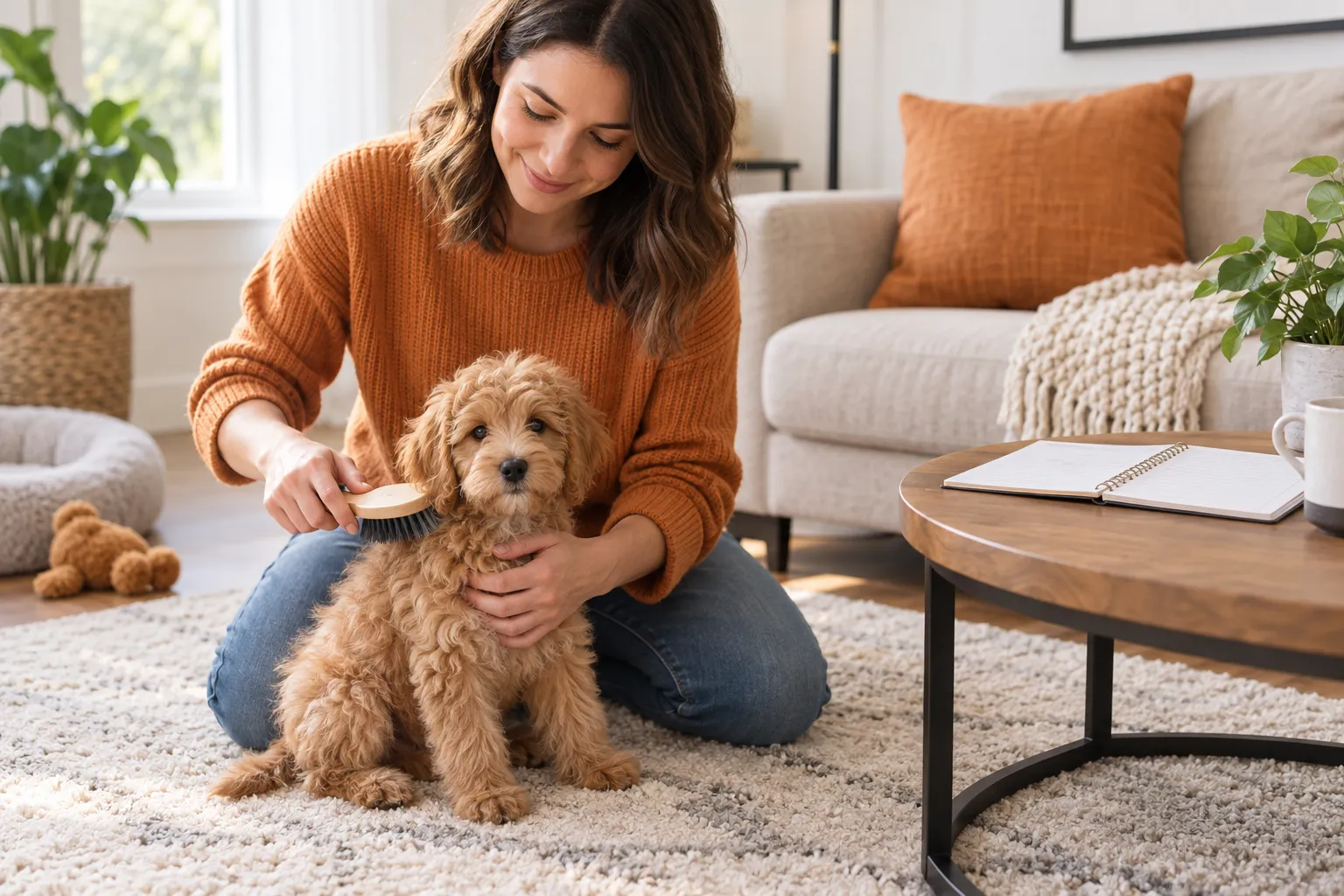
Check whether your ordinary week can accommodate care, not just the first few exciting days. Needs change with age, coat, and individual energy. The Cavapoo and Mini Goldendoodle Puppy Concierge and Sourcing service offers personalized breed-selection help and sourcing. Discuss your schedule and grooming expectations as part of that conversation, and plan for ongoing care.
Daily and Weekly Time Commitment: Exercise, Training, and Enrichment
Set aside time for age-appropriate movement, bathroom breaks, short training sessions, play, and rest. Young puppies need gentler activity and close supervision; an adult exercise routine may not suit a growing puppy. Food puzzles, sniffing games, and calm-behavior practice add mental work without relying only on longer walks. Consider who handles care when work runs late and who provides company when the household is away.
Coat Care Costs: Brushing, Matting Risk, Professional Grooming Schedule, and Shedding Truths
Plan for frequent brushing down to the skin, since tangles can tighten into mats. Coat texture affects maintenance, so ask a groomer to show you a home routine and help set a professional grooming schedule. Rates vary by location, coat condition, and service; request local estimates before budgeting. Mini Goldendoodles can shed, and a curlier coat does not prove a low-shed result. No crossbreed can be promised allergy-free.
Health, Lifespan, and First-Year Cost of Ownership
Budget for routine veterinary visits, food, supplies, grooming, training, and unexpected care, beyond the puppy’s initial cost. Costs vary, so gather current local estimates rather than relying on a generic total. Ask what health history and records are available, and bring medical questions to a licensed veterinarian. Perfect Puppy 4 U describes its Cavapoo and Mini Goldendoodle Puppy Concierge and Sourcing process as including puppy-history checks and an additional veterinarian check; that does not guarantee future health.
Your First Year with a Mini Goldendoodle: A Month-by-Month Reality Plan
The first year shifts gradually from close supervision to more independence, not in a straight line. House training, settling alone, and responding to cues take repetition. Puppies need plenty of rest, so build short activity and learning opportunities into the day rather than expecting long outings. Your puppy’s pace will vary; ask a licensed veterinarian about age-appropriate exercise and health questions.
Months 1-3: Settling In, House Training, and Early Socialization
Focus on predictable routines, safe exploration, bathroom breaks, and gentle introductions to everyday sights and sounds. Keep training brief and reward calm behavior. Socialization means positive, age-appropriate experiences, not forcing a puppy into busy situations. Follow your veterinarian’s guidance about safe exposure while vaccinations are underway. Practice tiny separations, such as briefly stepping out of sight, and return before your puppy becomes distressed.
Months 4-12: Adolescence, Alone-Time Training, and South Florida Heat and Humidity Adjustments
Continue reinforcing familiar cues as your puppy grows, and expect occasional setbacks with house training, recall, or settling. Increase alone time gradually, pairing brief departures with a comfortable resting area and safe activity. Enrichment can include sniffing games, food puzzles, and simple training. In South Florida, schedule outdoor activity for cooler parts of the day, provide shade and water, and move play indoors during hot, humid periods. Ask your veterinarian about heat-related concerns.
| Stage | What to prioritize | Reality check |
|---|---|---|
| Months 1-3 | Routine, bathroom habits, gentle socialization, short learning sessions | Frequent supervision and rest shape much of the day. |
| Months 4-6 | Practice cues, calm settling, brief and gradual separations | Skills may seem inconsistent as your puppy matures. |
| Months 7-12 | Maintain training, enrichment, and heat-aware activity | Keep routines steady while independence develops. |
Use this timeline as a flexible planning tool, not a deadline. Let your puppy’s health, confidence, and response to training guide the pace. If you are deciding whether your household can support changing needs, review your weekday schedule and backup-care plan before moving forward.
Choosing and Sourcing Your Puppy: Questions to Ask and How Perfect Puppy 4 U Can Help
Choose based on documented history and a realistic picture of the puppy, not photos or promises about adult size, coat, or temperament. A useful conversation should explain what is known, what remains uncertain, and whether the puppy’s needs fit your household. Perfect Puppy 4 U’s Cavapoo and Mini Goldendoodle Puppy Concierge and Sourcing includes breed-selection help, sourcing, and puppy-history checks. An additional veterinarian check does not guarantee future health.
Red Flags and Smart Questions for Breeders and Matching Services
Ask for clear answers and records before deciding. Be cautious of certainty where individual puppies vary, pressure to decide before your questions are answered, or unclear explanations of the puppy’s history.
- What information and health records are available for this puppy and its parents?
- What is known about the puppy’s observed behavior and early environment?
- Which details about adult size, coat, and shedding are estimates rather than guarantees?
- What does the sourcing and placement process include, and which details should I confirm with a veterinarian?
Common Questions Before You Decide
How much exercise is needed? Plan for daily movement, play, and mental activity, adjusted for age and the individual dog. Ask a veterinarian about suitable activity for a growing puppy.
Will a mini Goldendoodle shed? Shedding varies. No coat type guarantees a low-shed or allergy-free dog.
Can one live in an apartment? Possibly, if your routine supports bathroom breaks, exercise, training, enrichment, and companionship. Check building rules and plan for time alone.
What will grooming cost? Local rates depend on the coat and services needed. Ask nearby groomers for estimates and discuss maintenance expectations before choosing.
Talk to Perfect Puppy 4 U About Your Household
The Cavapoo and Mini Goldendoodle Puppy Concierge and Sourcing service can help you discuss breed fit and puppy sourcing. Share your household schedule, grooming comfort, and plans for time alone, then ask about current options. To start a personalized conversation, contact Perfect Puppy 4 U.
Frequently Asked Questions
Are mini goldendoodles hard to take care of?
Mini goldendoodles take real daily effort, so they are not an easy-care breed. Plan for consistent training, frequent brushing down to the skin, professional grooming, exercise, and gradual practice being alone. Each puppy inherits a different mix of traits, so consider your ordinary week rather than promises about coat or temperament.
How much does a Goldendoodle puppy cost?
A Goldendoodle puppy's cost goes well beyond the initial price, and exact figures vary, so we avoid quoting generic totals. Budget for veterinary visits, food, supplies, grooming, training, and unexpected care. Ask for current local estimates before deciding, and contact Perfect Puppy 4 U to discuss your budget and household fit.
Are Goldendoodles hyper?
Goldendoodles are generally active, people-oriented companions rather than calm lapdogs, but energy varies by individual. Ask about a puppy's observed behavior instead of relying on breed labels. Daily walks, play, training, and food puzzles or sniffing games can help channel energy in positive ways.
Where should a Goldendoodle sleep?
Many Goldendoodle puppies sleep best in a crate or a quiet, safe space close to family at first. Predictable routines and rest matter, since young puppies need plenty of sleep between short bursts of activity. The right setup depends on your home, so keep the spot comfortable, safe, and consistent.
What are some interesting facts about Goldendoodles?
Goldendoodles are a cross between a Golden Retriever and a Poodle, and mini versions typically range from about 15 to 35 pounds and 13 to 20 inches tall, according to Dog Academy. F1 and F1b generation labels do not guarantee coat, shedding, or personality. Coats may be wavy, curly, or flat, and even curly coats can shed.
Can mini goldendoodles live in apartments?
Apartment living can work for a mini goldendoodle if you commit to daily walks, play, training, and enrichment. A yard does not replace those routines. Barking and energy vary by individual, so ask about observed behavior before choosing a puppy rather than treating any breed label as a promise.
How do I know if a mini goldendoodle fits my family?
A mini goldendoodle may fit your family if your week can genuinely support training, grooming, exercise, and companionship, not just the first few exciting days. Consider your workday, travel plans, and backup care. Perfect Puppy 4 U, based in South Florida, offers personalized breed-selection help and sourcing; contact us at https://perfectpuppy4u.com/contact-us to discuss your household.