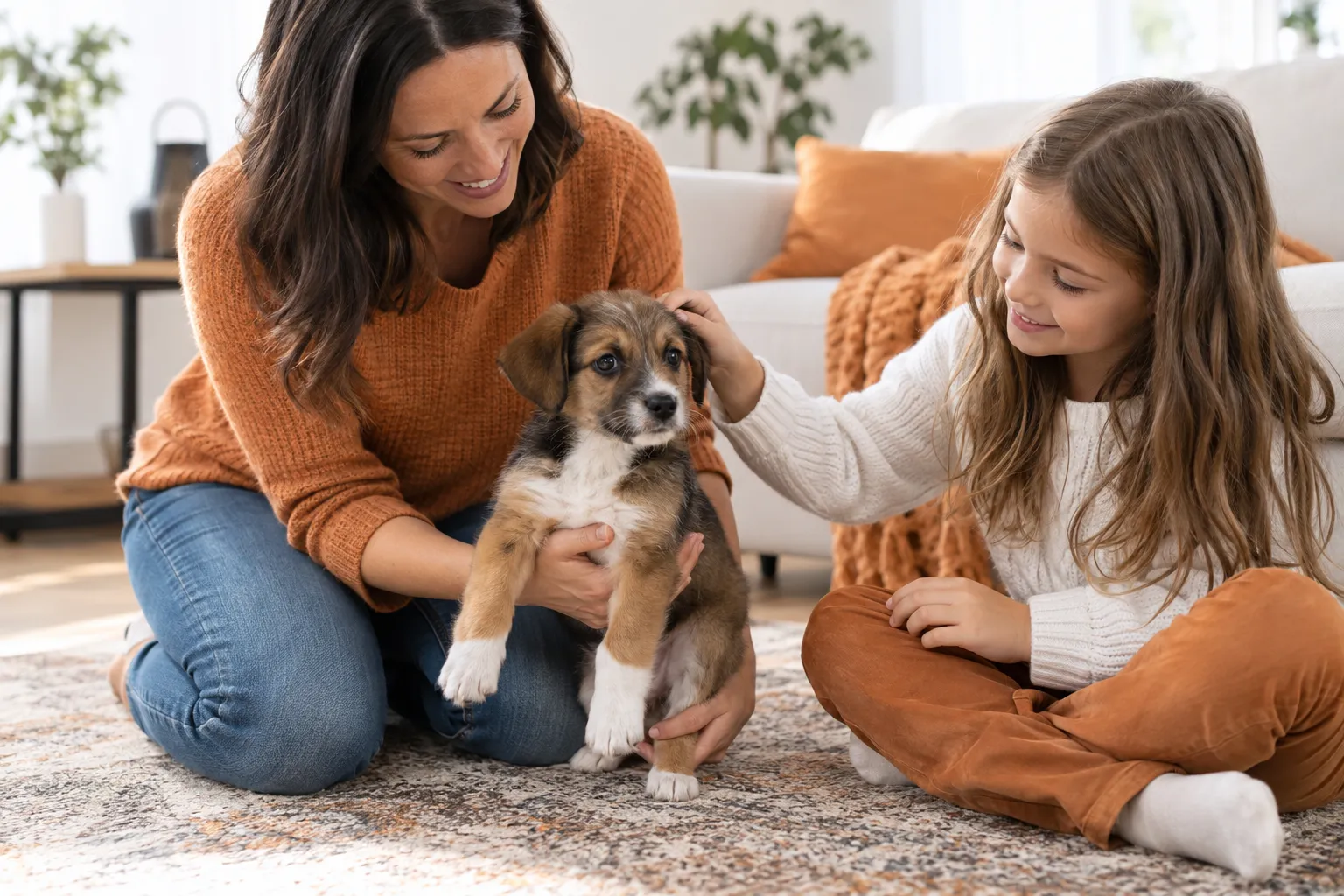
mini goldendoodle exercise needs
Mini Goldendoodle exercise needs depend on age, size, health, and energy. For an adult, about 45 to 60 minutes of daily activity is a useful starting point, divided into manageable sessions. For puppies, the often-cited five-minute guideline offers a rough starting point, not a veterinary rule. Mileage is only an estimate because walking pace and sniff breaks change distance.
How Much Exercise a Mini Goldendoodle Needs: Minutes and Miles by Age
Plan roughly 45 to 60 minutes of daily exercise for an adult Mini Goldendoodle, with walks, play, and training spread through the day. Goldendoodle Report cites this commonly recommended adult range. Younger puppies need brief, gentle activity; older dogs may need a lighter routine shaped by mobility and veterinary guidance. Individual dogs vary, so treat these ranges as planning estimates, not targets to reach at any cost.
Mini Goldendoodle Size and Why It Changes the Numbers
SpiritDog’s breed guide gives a typical Mini Goldendoodle range of 13 to 20 inches tall and 15 to 40 pounds. A smaller and a larger dog may differ in stride, stamina, and preferred pace. Development and fitness matter, too. Build a routine around the individual dog’s response, not the word “Mini” alone.
Age-by-Age Exercise Table: 8 Weeks Through Senior Years
The puppy estimates below apply the American Doodle Registry’s five-minutes-per-month rule of thumb once or twice daily. Mileage uses an illustrative pace of 20 minutes per mile; it is not a recommended distance or a prediction of how far your dog will travel.
| Life stage | Structured activity guide | Approximate miles at 20 minutes per mile |
|---|---|---|
| 8 weeks | About 10 minutes, once or twice daily | About 0.5 mile per session |
| 3 months | About 15 minutes, once or twice daily | About 0.75 mile per session |
| 6 months | About 30 minutes, once or twice daily | About 1.5 miles per session |
| Adult | About 45 to 60 minutes total daily | About 2.25 to 3 miles total |
| Senior | Adjust to comfort, mobility, and veterinary advice | No fixed mileage |
The 5-Minute-per-Month Rule and Its Limits
The five-minute guideline can help keep a young puppy’s routine from becoming a long, forced workout. It does not account for every puppy’s health, growth, or energy, and it is not a veterinary prescription. Until joints are more developed, avoid forced jogging, long hikes, repeated stair climbing, and extended fetch. Ask your veterinarian before increasing activity, especially if your puppy seems uncomfortable or unusually tired.
What Counts as Exercise: Walks, Sniffing, Play, and Mental Work
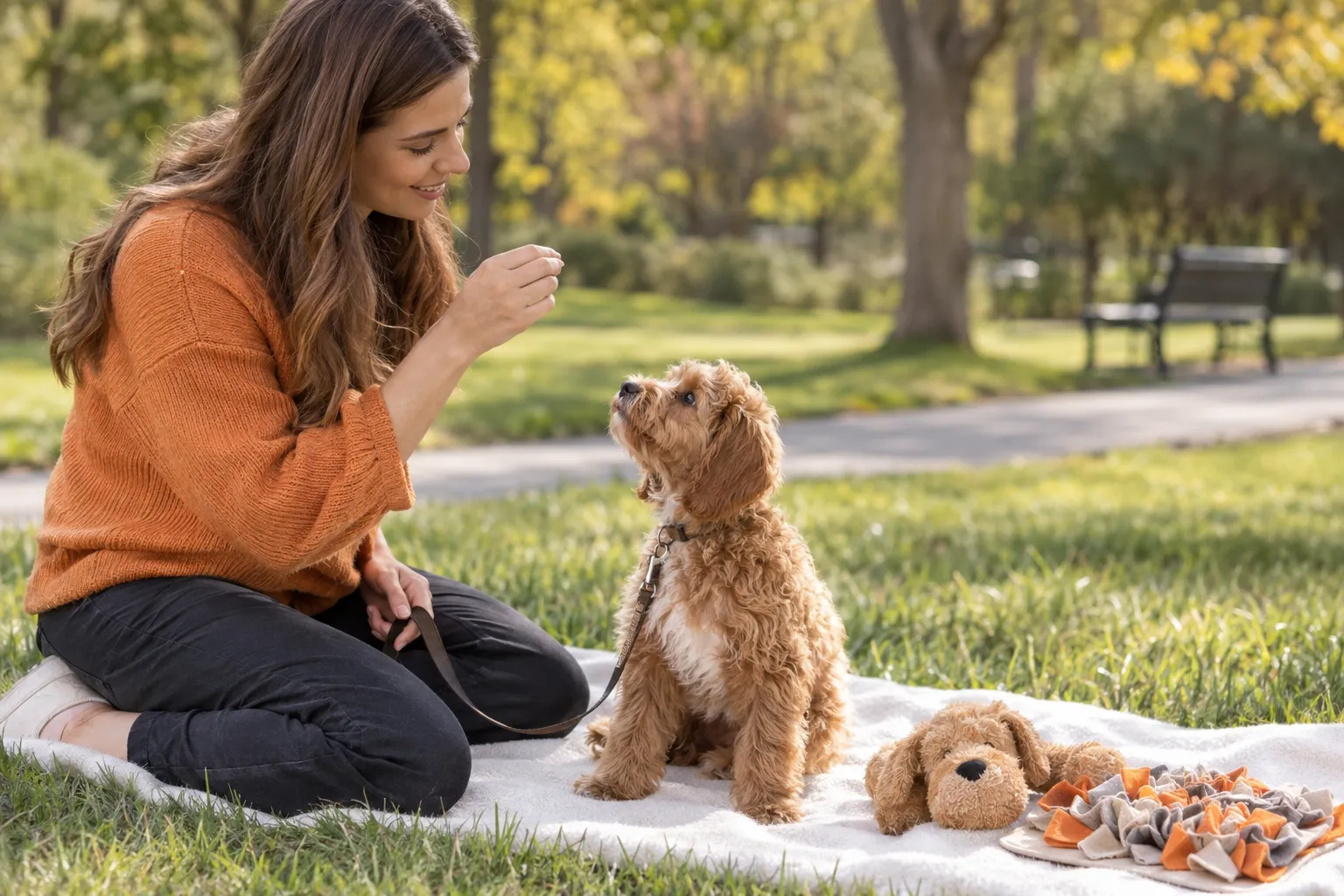
A useful exercise routine is not a race to tire your dog out. A relaxed walk with sniffing, a short training session, and gentle play provide different kinds of activity. If your dog still chews, barks, or jumps after a walk, try variety and a predictable wind-down rather than simply taking a longer route.
Beyond the Walk: Training, Puzzle Toys, and Scent Games
Use meals for simple enrichment: scatter some kibble for supervised searching, practice familiar cues, or offer an appropriate puzzle toy. Scent games let a dog investigate at its own pace, while short training turns attention into a focused task. Keep activities age-appropriate and stop while your puppy is engaged, before fatigue sets in.
Sample Daily and Weekly Routine a Family Can Copy
Think in flexible blocks, not one exhausting outing. A family might offer a brief morning sniff walk, a midday potty break with a few minutes of play, and an evening walk followed by a calm indoor activity. Across the week, alternate familiar routes with simple scent searches and training practice. Adjust for weather, household schedules, and your dog’s energy.
Overexercise Warning Signs and Teaching a Calm Settle
Stop activity if your dog lags, repeatedly sits or lies down, struggles to keep pace, or seems uncomfortable. Offer a quiet chance to rest and contact a veterinarian about health concerns. After activity, offer water, guide your dog to a comfortable resting spot, and reward calm behavior without restarting play.
- Begin at an easy pace and let your dog sniff.
- Pause for a short training cue or a calm check-in.
- Turn back before your puppy appears tired, then finish with quiet time.
For families weighing puppy energy against daily routines, the Cavapoo and Mini Goldendoodle Puppy Concierge and Sourcing service offers personalized breed-selection help, sourcing, and puppy-history checks. Discuss your household routine and the kind of activity you can offer through the concierge process.
Heat-Smart Routines and Labradoodle vs. Mini Goldendoodle Comparison
No single exercise plan fits every doodle. Age, health, size, conditioning, and individual energy all affect how much activity feels comfortable. Labradoodle exercise needs cannot be ranked reliably against a Mini Goldendoodle’s by breed name alone. Choose a routine you can adapt to the dog in front of you: a smaller dog does not always need less activity, and two dogs of the same type may have different stamina.
Mini Goldendoodle vs. Labradoodle vs. Standard Goldendoodle Exercise Needs
Size can help with planning, but it does not determine a dog’s daily needs. Goldendoodle Report commonly cites roughly 45 to 60 minutes of daily exercise for adult Mini Goldendoodles. Dogster describes a broader range for adult Goldendoodles, from 30 to 60 minutes to 1 to 2 hours, depending on size and energy. These are general guidelines, not a direct comparison with Labradoodles or a promise about an individual dog.
| Doodle type | Useful planning consideration | How to tailor activity |
|---|---|---|
| Mini Goldendoodle | Mini size does not guarantee low energy; individual stamina varies. | Use the adult range as a starting point, then adjust for age, pace, and recovery. |
| Labradoodle | Size and energy can vary, so the breed label alone does not set a mileage target. | Build a routine around the individual dog’s comfort and response. |
| Standard Goldendoodle | A larger size may affect stride and stamina, while energy still varies by dog. | Consider the dog’s conditioning and age rather than simply extending walks. |
Walking a Doodle in South Florida Heat: Timing, Pavement, and Hydration
In South Florida, plan outdoor activity around heat and humidity. Choose cooler times, such as early morning or later evening, and shorten the walk or move activity indoors when conditions feel oppressive. Asphalt and other paved surfaces can become uncomfortable for paws. Check the route and favor shaded grass when available. If the ground feels too hot to touch comfortably, choose another surface or skip the outing.
Bring water and offer breaks during warm-weather walks. Watch for unusual slowing, heavy panting, weakness, or difficulty continuing. End the outing and move somewhere cooler if your dog seems distressed; contact a veterinarian about health concerns. A veterinarian can help you decide whether an individual dog is ready for longer or more strenuous activity.
Do Goldendoodles Need a Lot of Attention? Matching Exercise to Your Family
Goldendoodles often benefit from regular interaction, activity, and chances to use their minds, but individual dogs differ. A walk alone may not meet a dog’s needs, and adding distance is not always the answer. Consider how much time your household can give to play, training, companionship, and quiet rest. Puppies also need gradual practice being comfortable alone. Plan for an ordinary weekday routine, not only weekends when everyone has extra time.
Attention, Enrichment, and Separation Comfort
Picture a typical evening: your dog has had an outing and a short training session, and now needs to settle while you make dinner. A supervised food-search activity or comfortable resting spot can offer engagement without keeping the household in constant play mode. Build alone-time practice gradually. If separation causes significant distress, ask a veterinarian or qualified behavior professional for guidance. Before choosing a puppy, consider work schedules, family commitments, and who can provide care throughout the day.
Questions About Distance, Frequency, and Family Fit
How far should I walk my Goldendoodle puppy? No distance suits every puppy. Keep outings gentle and brief, watch for fatigue, and ask your veterinarian before increasing activity. How many miles should an adult walk? Let your dog’s comfort and recovery shape the route rather than treating a mileage target as mandatory. Will a Mini Goldendoodle or Labradoodle suit a more active family? Breed labels alone cannot settle that question; individual energy, size, age, and your daily routine matter.
Finding a Puppy That Matches Your Routine
Write down your usual schedule, outdoor plans, grooming expectations, and the time you can offer for companionship. Then discuss those details through the Cavapoo and Mini Goldendoodle Puppy Concierge and Sourcing service, which helps families with breed selection, sourcing, and puppy-history checks. Explain your household needs and ask about current options. Contact Perfect Puppy 4 U to discuss your routine and puppy-match questions.
Frequently Asked Questions
How much exercise does a mini Goldendoodle need each day?
Mini Goldendoodle exercise needs for a healthy adult typically fall around 45 to 60 minutes of daily activity, spread across walks, play, and training. Individual dogs vary with age, size, and energy, so treat that range as a flexible starting point rather than a strict target.
How far should you walk a mini Goldendoodle?
Mileage is only a rough estimate for a mini Goldendoodle, since walking pace and sniff breaks change the distance covered. At an illustrative 20-minute-per-mile pace, an adult's 45 to 60 minutes works out to roughly 2.25 to 3 miles spread through the day.
What is the five-minute rule for Goldendoodle puppies?
The five-minutes-per-month guideline suggests brief, gentle activity for young puppies, such as about 10 minutes once or twice daily at 8 weeks. It is a rough planning tool, not a veterinary rule, so check with your veterinarian before increasing activity, especially if your puppy seems unusually tired.
What are the warning signs of overexercising a mini Goldendoodle?
Stop activity if your mini Goldendoodle lags behind, repeatedly sits or lies down, struggles to keep pace, or seems uncomfortable. Offer water and a quiet place to rest, and contact a veterinarian about any health concerns rather than pushing through fatigue.
Do mini Goldendoodles like swimming?
Many mini Goldendoodles enjoy swimming because both parent breeds were bred as water dogs, though every puppy is an individual. Introduce water gradually in calm, shallow areas, use a canine life vest, and always supervise. Ask your veterinarian before starting any new activity with a young puppy.
Is it hard to train a mini Goldendoodle?
Mini Goldendoodles are generally eager to please, which many families find makes training manageable with consistency and positive reinforcement. Short, focused sessions also count as mental exercise and help channel puppy energy. For breed-selection and sourcing guidance tailored to your household, a concierge conversation can help you compare options.
What does a good daily exercise routine look like for a mini Goldendoodle?
Think in flexible blocks rather than one exhausting outing: a brief morning sniff walk, a midday potty break with a few minutes of play, and an evening walk followed by calm indoor time. Across the week, alternate familiar routes with scent games and short training practice, adjusting for weather and your dog's energy.