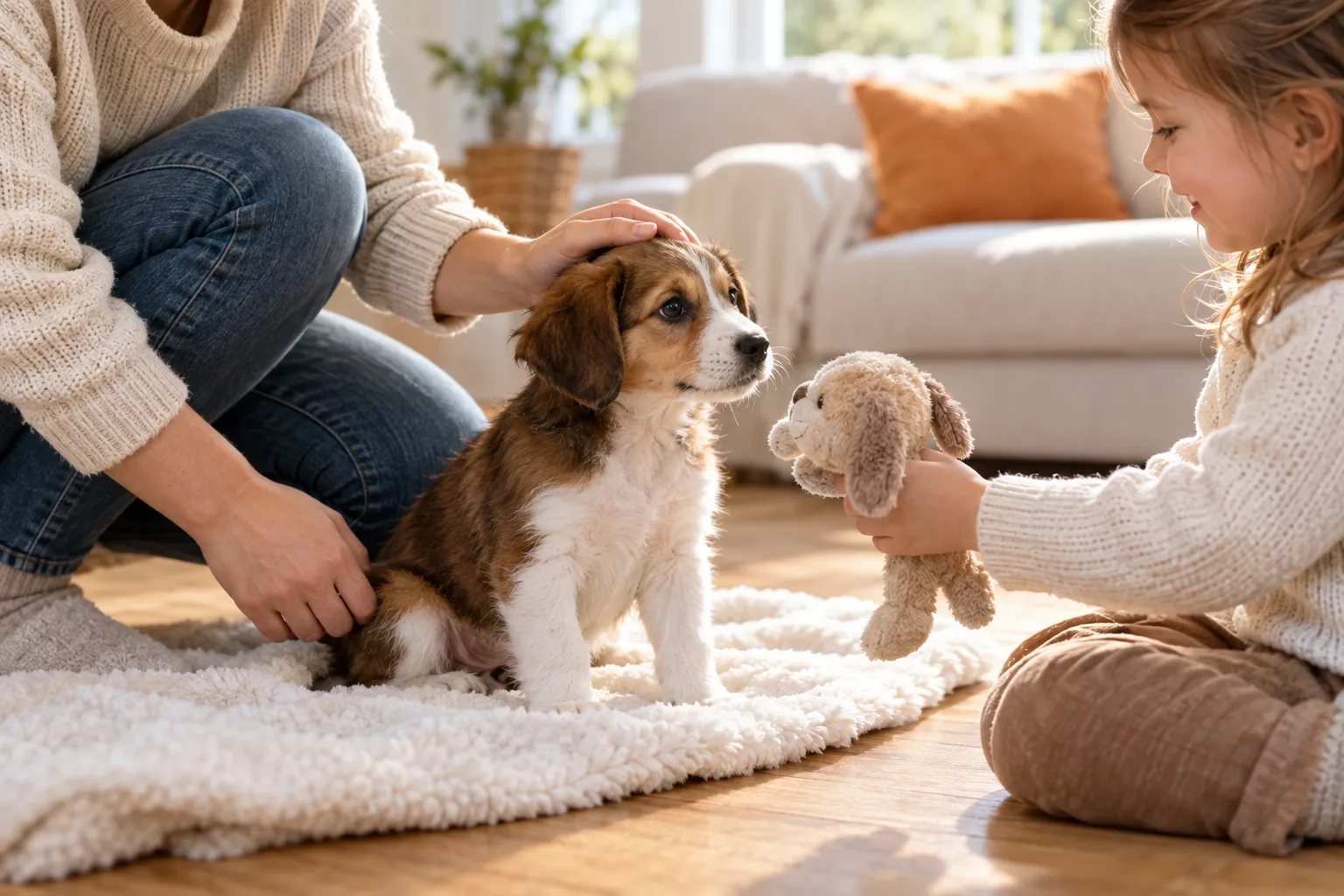
new puppy checklist
A new puppy checklist works best when it separates true essentials from items you can add later. Before pickup day, prepare food, a safe place to rest, basic walking and cleanup supplies, and a plan for veterinary care. Your puppy’s routine and individual needs matter more than buying every item on a long shopping list.
Key Takeaways
- Prepare your home before pickup day so your puppy settles into a calm, safe environment from the first hour.
- Prioritize the basics: appropriate food, a comfortable resting spot, walking gear and cleanup supplies.
- Schedule a veterinary visit early and keep health questions with a licensed veterinarian rather than relying on general guides.
- Let your puppy's individual temperament and routine guide additional purchases instead of buying every item at once.
- Planning the first 48 hours around consistency and gentle introductions helps a new companion adjust more easily.
For Cavapoo and mini Goldendoodle families, grooming tools deserve a place among the early essentials. A personalized sourcing conversation can also help you confirm what records and supplies to prepare for the puppy you are welcoming.
Your New Puppy Checklist: Must-Have Supplies Before Pickup Day
Start with the basics your puppy will need for meals, rest, safe outings, grooming, and cleanup. Ask what food the puppy currently eats and how meals are handled, then discuss any planned changes with your veterinarian. You do not need to fill every corner of your home with puppy gear before arrival.
Use this new puppy checklist to organize purchases by purpose. Must-haves support daily care; nice-to-haves can wait until you see what suits your puppy and household. A printable version can be made from this list using your browser’s print or save-as-PDF option.
- Meals: The puppy’s current food, plus separate food and water bowls that are easy to clean.
- Rest and safety: A properly sized crate, washable bed or blanket, flat collar, leash, and ID tag with your contact information. Check that the collar fits comfortably as your puppy grows.
- Play and cleanup: A few age-appropriate toys, potty pads if they suit your plan, and enzymatic cleaner for accidents. Keep small toys and loose parts away from chewing mouths.
- Grooming: A slicker brush and comb are useful starting tools for many Cavapoos and mini Goldendoodles. Their coats vary, so ask how to introduce gentle brushing and check tangles, especially around friction areas.
Bowls, a secure crate, a leash, identification, food, and cleanup supplies are practical first purchases. Extra toys, decorative accessories, and multiple beds can wait. Perfect Puppy 4 U’s Cavapoo and Mini Goldendoodle Puppy Concierge and Sourcing includes breed-selection help, sourcing, and puppy-history checks. When discussing the Cavapoo and Mini Goldendoodle Puppy Concierge and Sourcing process, ask what information about the individual puppy will help you prepare.
Puppy-Proofing and First Vet Visit: Set Up for a Safe Start
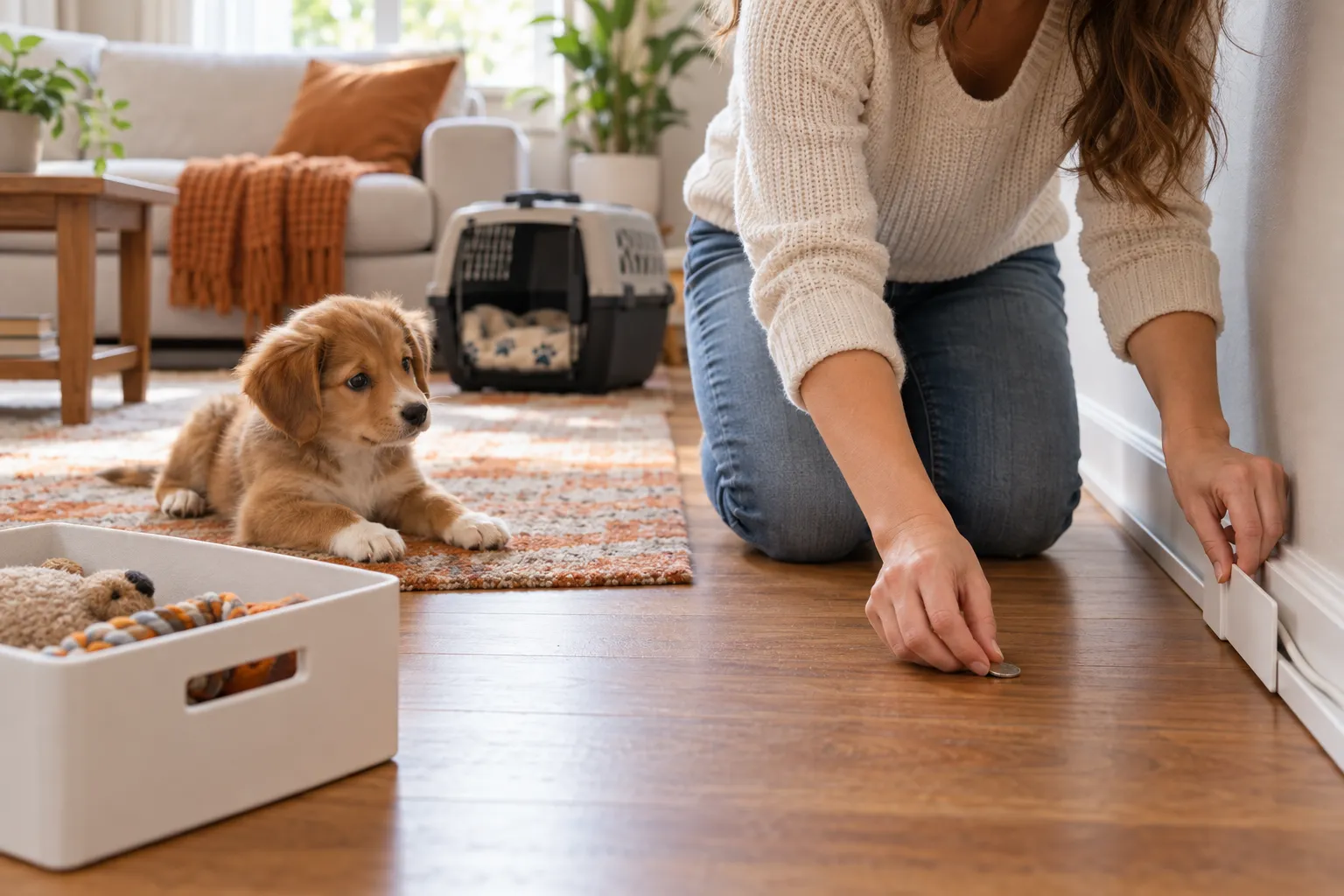
Before your puppy explores, get down to floor level and inspect each accessible room. Secure electrical cords, remove small objects that could be swallowed, and move toxic plants, medications, cleaning products, and human food out of reach. Close off stairs or rooms that are not ready, and check gates, doors, and outdoor areas for gaps. Keep the first puppy zone calm, uncluttered, and easy to supervise.
- Store household chemicals and medications behind closed doors.
- Pick up shoes, children’s toys, and other chewable or swallowable items.
- Check that the puppy has shade and fresh water, and avoid prolonged outdoor activity in South Florida heat.
Arrange a first veterinary visit within the first few days after arrival, and bring the puppy’s available health records, vaccination and deworming history, food details, and any questions. Ask the veterinarian to review the appropriate vaccination schedule and discuss parasite prevention, including flea, tick, and heartworm protection. The American Heartworm Society identifies heartworm as a year-round risk in South Florida and recommends monthly prevention; your veterinarian can advise on a suitable plan for your puppy.
The First 48 Hours: An Hour-by-Hour Plan to Reduce Stress and Accidents
Keep the first two days quiet and predictable. A puppy may be tired or unsettled after a change in surroundings, so introduce family members, rooms, sounds, and play gradually. Take your puppy to the potty area soon after arriving, then offer another break after meals, naps, and play. Stay close enough to supervise, and reward calm behavior with gentle praise or a small food reward.
- Arrival: Go directly to the potty area, then let your puppy explore one calm, puppy-safe space with you nearby. Keep greetings low-key and offer fresh water.
- First few hours: Show the crate with its door open. Let your puppy investigate at their own pace, and reward voluntary steps inside. Avoid using the crate as punishment.
- Mealtime: Offer the food and portion guidance provided with the puppy’s records. The American Kennel Club says puppies generally need three to four meals daily until six months of age, then two meals daily. Ask your veterinarian how that guidance fits your puppy’s age and needs.
- Evening and overnight: Settle the crate near your sleeping area so you can notice when your puppy wakes. Take a quiet potty trip when needed, then return to rest without turning the break into playtime.
- Day two: Keep the routine steady. Practice their name, a recall cue, and brief handling with rewards. Introduce ordinary household sounds and new people gently, while following your veterinarian’s advice about safe exposure before vaccinations are complete.
Early socialization means gentle, positive exposure, not overwhelming outings. The American Veterinary Society of Animal Behavior identifies the period from 3 to 14 weeks as an important socialization window. Ask your veterinarian which settings and puppy interactions are appropriate while your puppy’s vaccinations are still in progress. Cavapoos and mini Goldendoodles can differ in confidence, energy, and response to new experiences, so let the individual puppy set the pace rather than assuming a breed guarantees a particular temperament.
A personalized concierge journey can make the handoff more considered: discussing household routines, sourcing a puppy, reviewing available history, and arranging the additional veterinarian check described by Perfect Puppy 4 U. These steps can help you prepare relevant questions and records, but they do not guarantee future health or an easy adjustment. For the first 48 hours, focus on close supervision, familiar food, gentle introductions, and a repeatable rhythm of rest, meals, potty breaks, and reassurance.
Potty Training Basics, Common Mistakes, and Your First-30-Days Timeline
Potty training works best when breaks follow a predictable pattern and you can supervise closely. Take your puppy outside after waking, eating, drinking, and active play, plus regularly between those events. The American Kennel Club and PetMD note that puppies can generally hold their bladder for about one hour per month of age, though individual needs vary. Praise your puppy immediately after they go in the right place. If an accident happens, clean the area with an enzymatic cleaner and return to the routine without scolding.
- Days 1-7: Keep your puppy in a small, supervised area. Take them to the same potty spot and note when meals, naps, and bathroom breaks happen.
- Week 2: Use those patterns to plan breaks before your puppy is likely to need one. Add freedom around the home gradually, while continuing supervision.
- Weeks 3-4: Continue the routine and adjust it as your puppy’s signals and needs become clearer. Accidents are information: review timing, supervision, and access to the potty area.
Common first-week setbacks include giving a puppy too much unsupervised space and changing the schedule from day to day. Watch for sniffing, circling, or suddenly wandering away from play, then guide your puppy outside. Avoid punishing accidents; calmly interrupt if you catch one in progress and head to the potty area. Progress may not be perfectly steady, so keep expectations flexible.
Plan for both one-time purchases and ongoing care. One-time expenses may include adoption or placement costs, a crate, a leash, and initial home setup. Recurring costs can include food, routine veterinary care, parasite prevention, grooming, training, and replacement supplies. Use that range as broad context, not a quote for your household, and ask your veterinarian about likely care needs.
For Cavapoo and mini Goldendoodle households, include coat care in your recurring budget and schedule. The Cavapoo and Mini Goldendoodle Puppy Concierge and Sourcing service helps families discuss breed fit, sourcing, and puppy history. The Cavapoo and Mini Goldendoodle Puppy Concierge and Sourcing process can also help you identify questions to ask as you plan for a puppy’s arrival.
Want to discuss your household and current options? Contact Perfect Puppy 4 U for a personalized conversation.
Frequently Asked Questions
What is the 3-3-3 rule with puppies?
The 3-3-3 rule is a general guideline for a puppy's adjustment: three days to decompress, three weeks to learn your routines, and three months to feel settled and bonded. Every puppy is an individual, so let your puppy set the pace and keep the first weeks calm and predictable. Your veterinarian can guide health decisions during this period.
Where should a new puppy sleep the first night?
Most puppies sleep best the first night in a properly sized crate placed near your sleeping area. This lets you hear when your puppy wakes and take a quiet potty trip without turning the break into playtime. A washable bed or blanket inside helps the crate feel comfortable from the start.
How do you survive the first 48 hours with a new puppy?
Keep the first 48 hours quiet and predictable: go directly to the potty area on arrival, introduce family members and rooms gradually, and stick to steady meal and potty routines. Supervise closely, reward calm behavior, and let your puppy explore one puppy-safe space at a time. Save outings and new experiences until your veterinarian advises on safe exposure.
Can I leave my 8-week-old puppy alone for 3 hours?
Many 8-week-old puppies cannot reliably hold their bladder for a full 3 hours, and young puppies generally need frequent potty breaks, supervision and company. Build up alone time gradually in short sessions, and use a safe, puppy-proofed space if you must step out. Ask your veterinarian for guidance based on your puppy's age and development.
What supplies do I need before bringing a puppy home?
Start with the basics your puppy needs for meals, rest and safety: current food, easy-to-clean bowls, a properly sized crate, a washable bed, a flat collar with ID tag, a leash, age-appropriate toys and enzymatic cleaner for accidents. For Cavapoos and mini Goldendoodles, a slicker brush and comb are useful early grooming tools. Extra toys and accessories can wait.
How soon should a new puppy see a veterinarian?
Arrange a first veterinary visit within the first few days after your puppy arrives. Bring available health records, vaccination and deworming history, and details about the current food. Ask the veterinarian to review the vaccination schedule and discuss parasite prevention, including flea, tick and heartworm protection, which is a year-round consideration in South Florida.
How do I puppy-proof my home before pickup day?
Get down to floor level and inspect each room your puppy can access. Secure electrical cords, remove small objects that could be swallowed, and move toxic plants, medications and cleaning products out of reach. Close off unready stairs or rooms, and keep the first puppy zone calm, uncluttered and easy to supervise. Contact Perfect Puppy 4 U to discuss preparing for your specific puppy.